The Summer of Mango Sticky Rice
The traditional Thai dessert is finding new life across menus and categories.
A few years ago, mango sticky rice had its social media moment. Videos showcasing the classic Thai dessert—made with ripe mango and coconut-infused sweet sticky rice—introduced many people to the dish for the first time, generating widespread curiosity and conversation online.
Now, it’s back in the spotlight, in interesting and unexpected new ways.
Over the past few months, mango sticky rice has been showing up across social media feeds, limited-time menus, and grocery store shelves, only this time, the format is different. Operators across categories are translating its signature flavors and textures into new formats that fit their audiences and concepts—from ice cream and doughnuts to matcha drinks and shaved ice.
Google Trends data reflects that renewed interest. Search volume for “mango sticky rice” has climbed steadily over the past five years, peaking this year.
The movement spans both national brands and independent operators. Van Leeuwen originally introduced its Mango Sticky Rice ice cream as a spring seasonal flavor in 2025. According to the brand, the flavor broke into its top 10 performing flavors—a feat no special flavor had achieved in years.
Since then, the concept has expanded well beyond a limited-time offering. Van Leeuwen has rolled out Mango Sticky Rice in retail, recently announced that the flavor is now available in scoop shops nationwide, and earlier this spring introduced it as one of four flavors in its new line of French ice cream Bon Bons. What began as a seasonal scoop has evolved into multiple product formats, signaling sustained consumer enthusiasm for the flavor profile.
At the same time, smaller operators are embracing the trend through creative menu applications of their own.
Ice cream may be one of the most natural extensions of mango sticky rice. The combination of creamy coconut, bright mango, and chewy rice lends itself particularly well to frozen formats.
Blacksmith Ice Cream Co. (Salt Lake City, UT) recently featured a mango sticky rice-inspired flavor made with a coconut ice cream base folded with homemade sticky rice and layered with mango sorbet for a vibrant swirl. Rather than simply borrowing the flavor profile, the concept recreated the dessert’s signature texture in scoopable form.
Caffè Panna‘s (New York, NY) Mango Sticky Rice Sundae became a viral sensation, generating lines out the door and widespread social buzz. The sundae combined mango ice cream with coconut caramel, mango coulis, toasted coconut, panna, and coconut sticky rice arancini sourced from Laab Bar. The response was so strong that the shop recently brought the sundae back due to popular demand.
Bakery applications show how operators are introducing globally inspired flavors through products consumers already know and love.
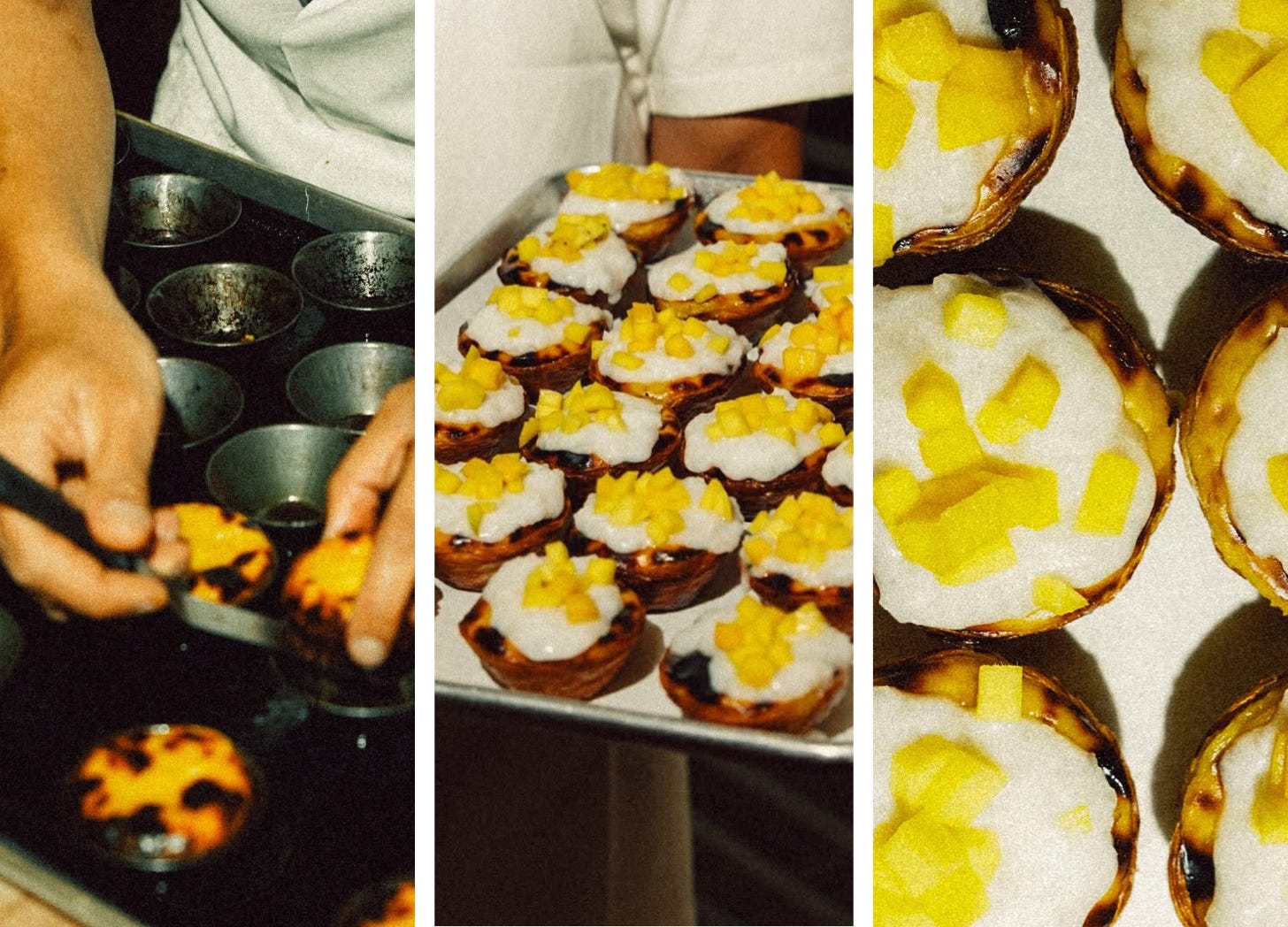
For AAPI Heritage Month, Lisbonata (New York, NY) launched a Mango Sticky Rice Pastel de Nata by infusing ripe mango into its signature custard filling before topping each pastry with sticky coconut rice and fresh mango. The result blended Portuguese tradition with Thai flavor inspiration in a format designed to spark curiosity.
Hani’s Bakery (New York, NY) took a similarly inventive approach with Mango Sticky Rice Doughnuts filled with mango jelly and sticky rice cream. By reinterpreting the dessert through a nostalgic bakery staple, the concept offered guests a low-barrier entry point to the flavor profile.
As matcha continues to evolve through seasonal flavors and limited-time offerings, mango sticky rice has begun finding a place within café menus as well.
Tu Dulce Matcha (Garland, TX) introduced a Mango Sticky Rice Matcha featuring mango syrup and coconut cold foam layered over matcha. The drink combined multiple trends already resonating with younger consumers: matcha, tropical fruit, and dessert-inspired beverages.
Los Coffeeholics (Santa Clarita, CA) also recently featured its own take on Mango Sticky Rice Matcha, layering matcha with mango purée and coconut-inspired elements reminiscent of the classic Thai dessert.
Bartenders are also drawing inspiration from mango sticky rice, adapting its defining elements into tropical, texture-driven cocktails.
At CookHouse (Baltimore, MD), the “Sticky Situation” cocktail captures the essence of the dessert through a combination of clarified rice, mango tequila, lime, coconut rice foam, and fresh mango.
White Noise (Toronto, Ontario), an intimate Asian-inspired speakeasy, introduced a mango sticky rice-inspired cocktail featuring rum, mango, pandan, coconut, and pineapple.
Others are expanding the boundaries of the dessert itself, using mango sticky rice as a foundation for other formats.
Na Ya Dessert Cafe (San Francisco, CA) drew lines out the door for its Mango Tango Bingsu, a layered dessert featuring sweet milk shaved ice, caramelized coconut sticky rice, and ripe mango. The concept demonstrates how familiar elements of mango sticky rice can translate seamlessly into other Asian dessert traditions.
Down to Earth (6 locations, HI) organic grocery recently introduced a Mango Sticky Rice Bowl layered with creamy tapioca pudding, toasted coconut, coconut sorbet, fresh mango, coconut cream, additional toasted coconut, and fresh mint. The offering reimagines mango sticky rice as a fresher, more customizable dessert experience while maintaining the flavor profile consumers recognize.
Mango sticky rice sits at the intersection of several consumer preferences that continue to shape innovation. Taken together, these examples point to something larger than a seasonal menu trend.Tropical flavors remain popular during the summer months. Texture-forward eating experiences—from chewy to creamy to crunchy—continue to drive excitement. And consumers are increasingly familiar with Asian-inspired desserts, creating more opportunities for operators to build upon flavors that once felt niche.


