

The burger is forever beloved—and one of the categories operators watch most closely for the next big idea. From bun swaps, to smash techniques, to ever-more-inventive toppings, it’s familiar, flexible, and endlessly adaptable, which makes it a natural platform for experimentation.
Over the past year, we’ve been seeing a playful new evolution popping up that doesn’t reinvent the burger itself, but rather, what it’s sitting in. Across markets, formats, and price points, chefs are splitting burgers and sandwiches and serving them directly on sauce rather than topped with it. Cheese, broth, beurre blanc, peppercorn gravy—these sauces aren’t condiments anymore; they’re the star of the plate. As sauce culture continues to heat up—and diners show no signs of tiring of dips, drizzles, pools, and pours—this format turns the plate into one big dipping experience. It’s indulgent, a little absurd, and taps into the same impulse driving the resurgence of French dips and au jus–soaked sandwiches: the joy of dunking, and an abundance of sauce.
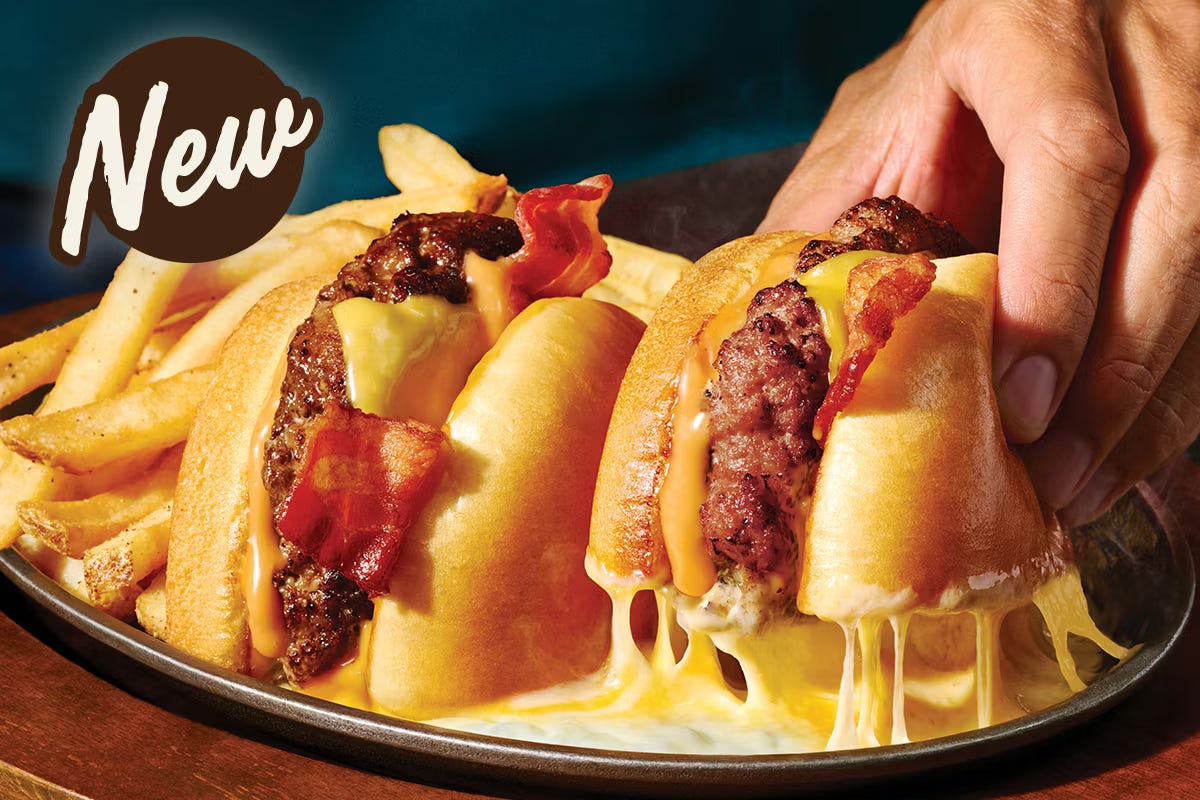
Then in January of this year, Applebee’s dropped its O-M-Cheese Burger: A classic beef patty topped with American cheese, Applewood-smoked bacon, and spicy honey mustard, cut in half and served face down in a sizzling skillet of molten cheese.
What’s surprising isn’t that they put it on the menu (long known for their signature sizzling fajita platter, this taps into the same sensory appeal, while meeting the new sauce-obsessed moment), it’s that legacy casual-dining brands like Applebee’s don’t typically adopt emerging trends this quickly.
What started as chef-driven experimentation moved fast. Very fast. In a matter of months, this format has jumped from independent restaurants and cult sandwich spots to casual chains and theme parks—signaling not just a trend, but that innovation and adoption cycles are accelerating. What once took years to trickle down is now moving in months.
When a familiar category like burgers starts to evolve at the format level—and that evolution shows up simultaneously in indie kitchens and national chains—it’s a signal that the idea is both resonant and scalable. “Sandwiches on sauce” doesn’t ask diners to learn something new; it simply amplifies what they already love: dunking, indulgence, and a little bit of mess.
Check out some of our favorite examples from across the country.
