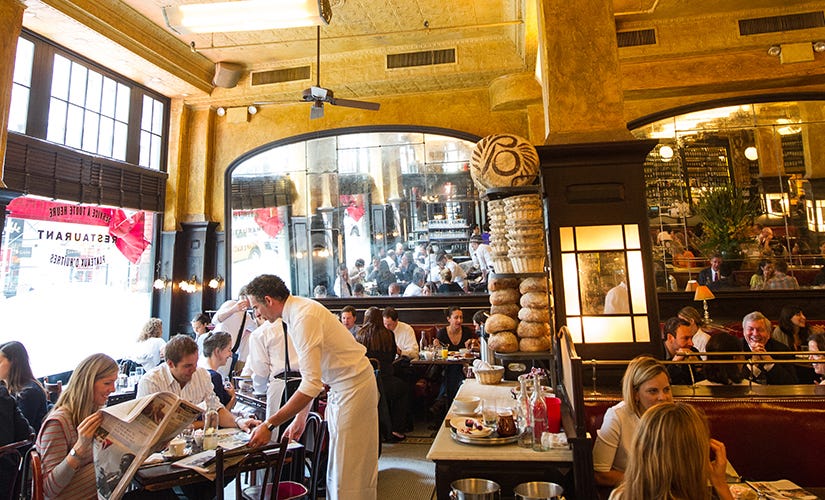
All-Day Dining Concepts: Monetize Time, Not Just Tables
The Advantages, Challenges, and Strategies That Make This Increasingly Appealing Format Work
On paper, the all-day restaurant is one of the most compelling models in hospitality. The math is seductive: more hours open = more opportunities to generate revenue and fewer dead zones where rent, utilities, and fixed costs quietly drain profitability. When it works, an all-day concept turns real estate into a high-performing asset that earns from morning coffee through late-night cocktails. In practice, however, all-day dining is one of the hardest formats to execute well.
We predicted a rise in more multi-concept all-day venues in our 2025 Hospitality Trends Report citing Gen Z’s propensity for snacking, the increase in more flexible work from home practices, and a rise in off-peak ordering. More recently we have seen both the New York Times and Eater delve into this topic.
Here we want to take a more practical approach: what are the advantages and challenges of an all-day restaurant concept, and what are some of the various models that make it work. We’ll also be sharing some of our favorite and most compelling examples along the way. Let’s get to it.
All-Day Appeal — Advantages On Paper
The upside is real. Extending service across multiple dayparts allows operators to build frequency in the morning and margin at night. The advantages include:
Maximize revenue per square foot - You’re no longer paying rent for a dark, unused box between 2–5pm.
Habit-building potential - Morning coffee creates frequency; dinner creates margin. The best concepts capture both.
Broader audience reach - One space can serve locals in the morning, business lunches mid-day, and social or celebratory occasions at night.
Operational leverage - Shared kitchen infrastructure, and space along with smarter inventory flow across dayparts.
The Very Real Challenges
The challenges are just as real—and often underestimated.
Labor complexity & costs - Longer hours = more staffing, more scheduling complexity, more fatigue, and higher costs
Brand schizophrenia - Guests struggle to mentally map “coffee spot” to “date-night destination” unless you force the transition.
Menu dilution - Trying to be everything often results in being memorable for nothing.
Dual-purpose design - Design needs to be appropriate for each different use or meal period.
Vibe shift - A room that feels right at 9 am can feel dead—or awkward—at 8 pm unless there are intentional environmental shifts.
Marketing clarity - You’re not selling one idea; you’re selling multiple occasions under one roof. A clear strategy and brand message is essential.
Strategic Levers That Separate Winners from Burnouts
The all day restaurant concepts that work are disciplined about design that transforms rather than decorates. They build menus by daypart and market occasions, not just menu items. They train teams for tempo, not just service. Most importantly, they understand that flexibility is not improvisation. It’s strategy.
Some concepts flex a single identity across the clock. Others split into two distinct experiences. A few evolve into something larger than hospitality itself. But in every case, the math only works when brand clarity, operational discipline, and guest understanding are aligned.
The opportunity is real: better rent efficiency, stronger frequency, expanded reach.
The risks are just as real: labor creep, brand confusion, diluted identity.
Insight-OUT: All-day restaurants succeed because they are engineered to own multiple moments in a guest’s life—morning habit, midday convenience, evening emotion—without creating friction. They are not the ones trying to be everything. They are the ones who define clearly what they are at each moment of the day—and execute it relentlessly.
The Secret Sauce:
Design that transforms, not just decorates
Menus built by daypart - with very clear intent
Staff trained for tempo, not just service - morning speed and efficiency v. evening deliberate hospitality
Occasion-based marketing - morning habit, midday convenience, and evening emotion
Programming as a bridge - happy hour, afternoon pastries, late-afternoon coffee cocktails—these help smooth the dead zones.
The all-day restaurants that succeed aren’t simply open longer. They are deliberate about how they flex—operationally, emotionally, and experientially—across the day.
There are a handful of proven models that consistently get this right, when executed thoughtfully and intentionally. We’ll dig deeper into which models work and why in an upcoming article next week.


